- The Formation
- Led Zeppelin I (1969) & Led Zeppelin II (1969)
- Led Zeppelin III (1970) & Led Zeppelin IV (1971)
- Houses of the Holy (1973), Physical Graffiti (1975), and Robert Plant’s Car Accident
- Setting Arena Attendance Records
- The Two Tragedies
- The Legacy and Influence of Led Zeppelin
- 5 Essential Led Zeppelin Albums
- 5 Essential Led Zeppelin Songs
- Best Podcasts and Books About Led Zeppelin
The wailing of Robert Plant’s iconic voice. The speedy pulse of John Bonham’s drums. The bouncing drive of John Paul Jones’ bass. The transformative flow of Jimmy Page’s guitar.
Led Zeppelin, the greatest rock ‘n’ roll band of all time, began in the late ‘60s as an idea. What happened over the next decade throughout the 1970s was nothing short of magic. In the annals of rock ‘n’ roll history, it doesn’t get much more iconic than this foursome.
Here’s the Beginner’s Guide to Led Zeppelin.
The Formation
Led Zeppelin formed in London in 1968, following in the footsteps of fellow Englishmen of the Beatles and the Rolling Stones. (What was in Britain’s water in the ‘60s? Can we get some of that?)
Originally called the New Yardbirds, the group’s formation was led by Jimmy Page who’d been playing with the original Yardbirds. In the way that the ‘60s worked, a bunch of now iconic musicians knew each other from the scene, and Page wanted to create a band to keep the tradition of the Yardbirds moving forward, initially wanting to form a supergroup with Jeff Beck alongside members of The Who. But it didn’t work out.
There were a few more obstacles. Page’s first choice for a vocalist was Terry Reid, but Reid declined because he was about to go on tour in the United States with the Rolling Stones. Instead, Reid recommended a young singer named Robert Plant from a group called Band of Joy. Plant accepted and brought his drummer John Bonham along for the ride. John Paul Jones filled in at bass, and the group was formed. Eventually, the band received a cease and desist, forcing the Yardbirds to change their name.
The name’s origin story goes something like this: Fellow musicians thought that a supergroup with Page and Beck would go down like a “lead balloon.” Manager Peter Grant suggested they drop the “a” in “lead,” and Page replaced the word balloon with “zeppelin,” which he loved because it was the “perfect combination of heavy and light, combustibility and grace,” according to biographer Keith Shadwick.
Boom. Led Zeppelin was born.
The band signed with Atlantic Records for $143,000, which was at the time the biggest deal of any kind for a new band. However, the record label gave them a favorable deal, focusing on album creation and designing their tour schedule. In a way, given the talent involved, it seemed like everyone in the presence of the newly formed Led Zeppelin understood magic was happening and allowed them to cook. This later would prove vital to the band’s success, as their album-oriented rock music helped shape the way bands approached creating music.
Led Zeppelin I (1969) & Led Zeppelin II (1969)
When the music of Led Zeppelin hit the ears of the world in early 1969, there really was nothing similar. It’s trite to say, sure, and the fact that every year in September, you can walk around any college dorm swinging a stick and wack a freshman who’s wearing a Led Zeppelin shirt they just purchased at Target doesn’t help with beating the clichés, but that remains the God’s honest truth. Zep invented a sound — a wild, bold, and infectious combination of blues, riffs, and psychedelia. Plant’s voice carried so much weight, and Page seemed to float as he played guitar.
The band toured North America and quickly released their second album, Led Zeppelin II, only nine months after their debut. On these two records alone, the band gave the world the following hits: “Good Times Bad Times,” “Communication Breakdown,” “Dazed and Confused,” “Babe I’m Gonna Leave You,” “Ramble On,” “Heartbreaker,” “Living Loving Maid (She’s Just a Woman),” “What Is and What Should Never Be,” and, of course, “Whole Lotta Love.”
The group’s energy popped, matching the hippy culture of the time. Who didn’t want to grow their hair long, smoke a joint, and spend their days listening to “Dazed and Confused”? A lot of people did indeed do that.
Recording Led Zeppelin III (1970), Led Zeppelin IV (1971), and Becoming the Biggest Band in the World
Even if the band had broken up after recording just two albums, they’d still be legends. But that didn’t happen, and that’s not our reality. So instead, Zep kept pushing, and their swagger and heaviness only grew in impact, understanding their musicianship and how they could continue transforming their product.
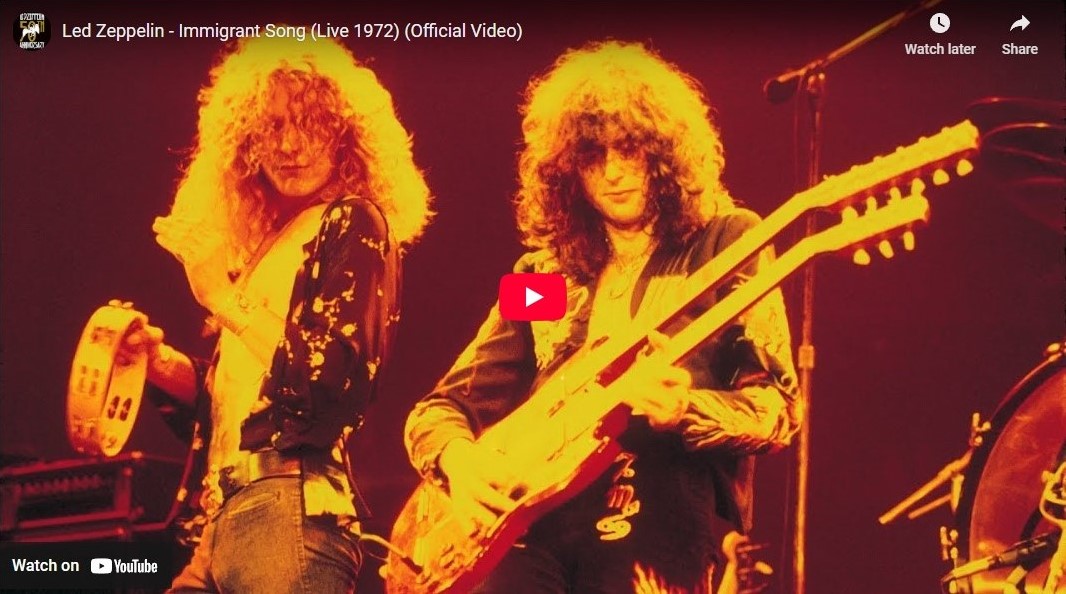
It evolved in 1970 when Page and Plant retreated to Bron-Yr-Aur, a now famous cottage in Wales, to write the next album. Those sessions produced much of what would become Led Zeppelin III, a record that featured more acoustic guitar than the first two records. Initially, it was met with some confusion, but in hindsight, it showed versatility. For example, it gave the world “Immigrant Song,” which is one of the fiercest tracks ever recorded.

Geograph (cropped).
Licensed under CC BY-SA 2.0.
After the release of Led Zeppelin III, the band toured relentlessly. And during the 70s, they reached new highs both critically and commercially. They embraced the rock star lifestyle, dressing in flamboyant manners and tight, tight pants. (If you wanna go down a fun rabbit hole, search images on the internet for “Robert Plant pants.” FYI: it’s NSFW if you know what we mean.)
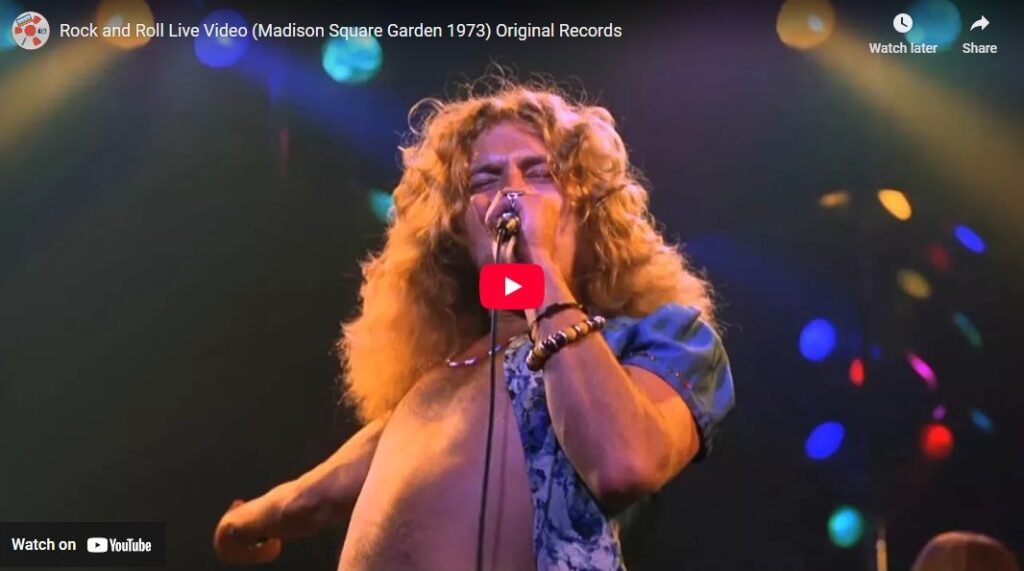
With the release of Led Zeppelin IV in 1971, they became the biggest band in the world. “Stairway to Heaven,” which wasn’t released as a single, became the most played song of the decade. It also demonstrated the group’s versatility and how they tackled such a wide range of sound. “Going to California” elegantly charmed, “Black Dog” gloriously shined, and “Rock ‘n’ Roll,” well — we know this description might be a little on the nose, but who cares? — fucking rocked.
The early 70s featured the band aggressively touring and embracing hedonism. They nicknamed their private jet the Starship and filled the time between shows with an absurd amount of legendary debauchery. The tour stories also gained their sort of mystique — and pretty much every band since has tried to replicate them. One classic tale — who knows if it’s true or not — is that John Bonham rode a motorcycle through a hotel, causing the band to be banned for life.
Their life was an endless flow of drugs and booze, hanging out with beautiful women, and frankly, in hindsight, extremely problematic behavior that rightfully would not be tolerated in today’s world. However, the ‘70s were a different time. Later, in 2003, the band released How the West Was Won, which captured the band playing the L.A. Forum in 1972, as they were reaching the top of the mountain as the biggest band in the world. The triple-sided live album and concert film is an authentic slice of rock ‘n’ roll history, capturing a band’s thunderous and reckless energy on their ascent into the stratosphere.
Houses of the Holy (1973), Physical Graffiti (1975), and Robert Plant’s Car Accident
The party pushed onward. Led Zeppelin, perhaps more than any other band in rock history, walked the line of living a ludicrous lifestyle while cranking out incredible music. Did one end of the burning candle fuel the other end? Likely. The music captures the hedonism, a transformative sound pulsing through the veins of sepia-toned, denim-wearing young people in the 70s.
The band followed Led Zeppelin IV with Houses of the Holy, released on March 28, 1973, experimenting while retaining their dynamic and identifiable sound. Indeed, it was a stylistic turning point, though, and created a blueprint for the rest of the band’s releases. Houses of the Holy didn’t abandon the rock ‘n’ roll energy but harnessed it more. Its tone is less of a blitzkrieg; more of elegant psychedelia — specifically “D’Yer Mak’er” and “No Quarter.” But there’s a cleanliness to the sound. Brighter guitars. It wouldn’t be a stretch to guess that some mind-altering substances were maybe utilized in its creation. Dare we call it sophisticated? The group then toured North America in 1973 and sold about ten gazillion concert tickets.

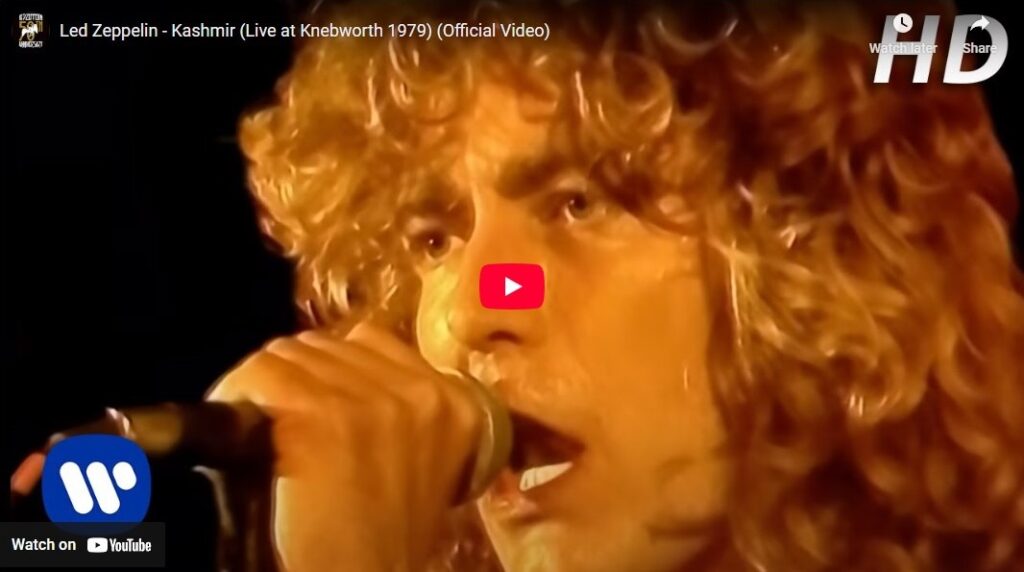
After a bit of time off in 1974, in which they started their own record label called Swan Song Records, Led Zeppelin returned with Physical Graffiti, released on February 24, 1975. The record was compiled from earlier recordings in the band’s career and a specifically dedicated session in Headley Grange in 1974. Because of how the record was compiled, Physical Graffiti captures a wide range of the band — the sprawling double album showcases early, youthful energy placed against the sophistication that came with a few records under the members’ belts. It was the first release on Swan Song, and gave us many iconic Zeppelin tracks, such as “Houses of the Holy,” “Down by the Seaside,” and, of course, “Kashmir,” the ultimate Led Zeppelin banger. Physical Grafitti was met with wide commercial and critical acclaim and actually caused the rest of the band’s discography to re-enter the album charts. They also toured venues across the world, including five nights sold-out nights at the Earl Court Arena in London.
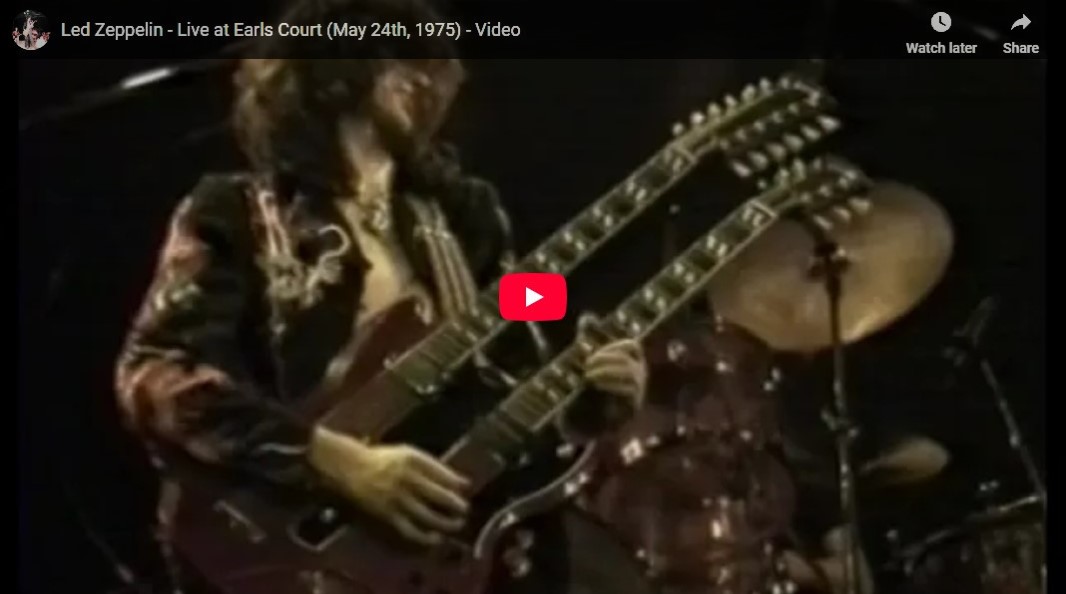
Put it another way: these four Englishmen made a lot of money in 1975.
Shortly after Physical Graffiti and its subsequent tour, the band took a hiatus — but it wasn’t planned. Plant and his wife Maureen were in a terrible car accident in Rhodes, Greece, and Plant suffered a broken ankle while Maureen almost died. While he recovered, the band joined him, and they wrote much of Presence, which would be released on March 31, 1976. (Plant recorded the vocals while sitting in a wheelchair.) The record received a mixed reception at the time, but, in hindsight, it’s viewed as undersung and underappreciated, an opportunity that Zep took to establish their heavy metal fierceness.
The band didn’t tour in 1976 due to Plant’s injury, so instead released a concert film called The Song Remains the Same. It premiered in New York City on October 20, 1976.
Setting Arena Attendance Records Across America in 1977 and Making Money Hand Over Fist
In 1977, the band toured North America again, and the whole world came to see it. Throughout the year, they set attendance records across the continent. And, on April 30, they set a record in the Guinness Book of Records with 76,229 fans for the largest attendance for a single act show up until that point.
And yet, despite selling out arena after arena and raking in cash, it’s also true that something felt off, and the vibes were a little… different. The band had been creating music and touring relentlessly for almost a decade, and it was clear on some level that their party lifestyle was catching up to them. Rumors are that Jimmy Page was doing heroin around this time (which, for the record, he denies), and on some level, the music was starting to feel stale. The crowds surrounding their music were getting gnarlier and gnarlier, too — and riots broke out around June’s show in Tampa.
The Two Tragedies That Brought the End of Led Zeppelin: Robert Plant’s Son and John Bonham’s Death
Later in the summer, as the band checked into a hotel in the French Quarter of New Orleans for a show at the Louisana Superdome, true tragedy struck. Robert Plant got word that his 5-year-old son Karac had died unexpectedly from a stomach virus. The rest of the tour was immediately canceled, and Plant retreated home to England for months. During this time, he questioned everything — not just the future of Led Zeppelin but his own psyche and vision for the future.
A tragedy of epic proportions, it’s difficult to imagine what it would’ve been like. Plant, who couldn’t have been more on top of the world, was forced to reckon with his mortality. He’d turn this into lyrics for music that would then appear on what would be the band’s final album, In Through the Out Door, which was released on August 15, 1978. In particular, “All of My Love” — one of the most beautiful songs ever recorded by Led Zeppelin — was written to honor Karac.
Meanwhile, the band pushed onward, looking to start their first North American tour since 1977. It was scheduled to begin on October 17, 1980. However, about a month prior, on September 24, 1980, John Bonham was picked up by the band’s assistant to meet for rehearsals.
The two stopped on the way for breakfast, during which Bonham drank four quadruple vodkas, joking about the amount he was drinking to the assistant. He kept drinking throughout the day until after rehearsals and passed out around midnight. The next day at 1:45 PM, he was found dead by tour manager Benji LeFevre and John Paul Jones. He’d vomited in his sleep and choked to death.
The band canceled the tour, and that was it. The band officially broke up and ended things on December 4, 1980, when the three members released a statement to the press:
“We wish it to be known that the loss of our dear friend, and the deep sense of undivided harmony felt by ourselves and our manager, have led us to decide that we could not continue as we were.”
It was signed, simply, “Led Zeppelin.”
The Legacy and Influence of Led Zeppelin
Led Zeppelin’s revelatory music and style represent the transitionary period from the ‘60s to ‘70s, a hedonistic hippy lifestyle that donned leather pants, embracing a tough guy rocker attitude while being very, very pretty. (How much time do you think Plant or Page spent on their hair?) Musically, their impact knows no end. Their focus on making album-oriented-rock provided a blueprint for musicians — to think about songs within a greater context, not limited by the condensed nature of songs. The influence of their creativity has rippled throughout every corner of music and adjacent cultures since — and will continue to do so.
These four men truly lived like psychopaths, embracing the chaotic rock ‘n’ roll lifestyle to the max, utilizing their next level of talent and blending it with hard work while living on the edge. They existed in excess. Too much wasn’t enough. What does the drive for utter dominance do to the human soul? Great art. But at a cost — and in the case of Zep, both to themselves and the people around them. The fact that Bonham died so tragically is sadly appropriate — an allegory for the fleeting nature of that freedom and exuberance bread in that period of culture.
At the end of Easy Rider, the iconic biker film that highlights the death of the counterculture, Wyatt (Peter Fonda) and Billy (Dennis Hopper) are sitting around the fire. They’d just journeyed across America on a trip fueled by drug money, over the mountains, and through the desert while arguably causing the death of a man named George (Jack Nicholson) they met along the way. Billy is stoned, smoking a joint, laughing and reminiscing, continually repeating, “We’re rich, Wyatt! We’re rich, man. We did it… We did it. We’re rich!” Wyatt is less impressed. Eventually, he cuts him off. “No, we didn’t. We blew it.” Billy doesn’t understand, and Wyatt repeats himself. “We blew it, man.” And he turns over and goes to sleep.
That moment is a fascinating self-reflection on the push to live life to the fullest — however that’s defined. What did the ‘60s and ‘70s give us? Led Zeppelin’s reign throughout those decades defined multiple generations. “Many, many men can’t see the open road,” Plant howls in “Over the Hills and Far Away.” He boldly continues: “Many is a word that only leaves you guessing.” The band shifted culture and carried a certain self-awareness — or at least they had enough to make the logo of their record label an image of Icarus. Taking flight is always thrilling. But what happens when the wings melt?
5 Essential Led Zeppelin Albums
Where do you begin with the Led Zeppelin discography? Although the band only existed for about a decade, they cranked albums out. Here, we offer a select five albums that we at Binaural deem essential. (Although let’s be real: Just listen to everything the band recorded.)
Led Zeppelin IV (1971)
Led Zeppelin IV invented rock ‘n’ roll as we know it and is the foundation upon which the band’s discography is built. Released on November 8, 1971, the 8 tracks capture the band at their heaviest and loudest — a beastly and dynamic artifact of the energy in the early 70s. But don’t think this album is of the past. In fact, its ability to endure and be rediscovered by generation after generation is why it remains so important. “Stairway to Heaven” is the most played rock song ever in the history of radio. It doesn’t get more iconic than that, eh?
Select songs: “Rock ‘n’ Roll,” “Going to California,” “Stairway to Heaven”
Physical Graffiti (1975)
Led Zeppelin’s Physical Graffiti was released on February 24, 1975. It was recorded over an eight-month period at Headley Garage, Zep’s famous country house recording studio in Hampshire, which gave them plenty of time to experiment. That playtime brought together some of their heaviest riffs ever — where were you when you first heard “Kashmir”? — and they created enough material to release their first double album. Physical Graffiti was also their first record on their own record label, Swan Song Records, showcasing how the band was taking control of their own destiny.
Select songs: “Houses of the Holy,” “Kashmir,” “Trampled Under Foot”
Led Zeppelin II (1969)
In a lot of ways, Led Zeppelin II is the album that made Led Zeppelin. There were always high expectations for the band — as we told you, Page formed it under the premise of a supergroup — but what to expect from the music? The band delivered, releasing Led Zeppelin II in October 1969, just seven months after their debut Led Zeppelin I. It rocketed to commercial success. “Whole Lotta Love” became an anthem all over the world and set the tone for the next decade — a period of time they’d spend as arguably the biggest band in the world.
Select songs: “Ramble On,” “Heartbreaker,” “What Is and What Should Never Be,” “Whole Lotta Love”
Houses of the Holy (1973)
With the band’s fifth album, they broke the mold of self-titling their albums, and what an album to do it with. On Houses of the Holy, they experimented a bit more — not just heavy riffs, but exploring the sounds that made them so good live, a blend of psychedelia and classic rock. “The Song Remains The Same” is a thesis statement of sound, showcasing the band’s acoustic diversity while remaining heavy. Moreover, the bizarre album cover — designed by iconic English design group Hipgnosis — is based on an image of Giant’s Causeway in Northern Ireland, reflecting the twisted and psychedelic sounds of the record, showcasing the band’s artistry as they pushed forward while existing as the biggest band in the world.
Select songs: “Over the Hills and Far Away,” “Dancing Days”
How the West Was Won (2003)
What was it like to see Led Zeppelin in the early ‘70s? That’s a feeling that will never be repeated, but it was recorded. Released in the early 2000s, this live triple album is taken from two California performances in 1972. Throughout the recording, it’s clear just how dynamic and transformative the band’s sound was. Plant’s howl against Page’s guitars is chaotic and beautiful, a driving, bluesy growl that’s also somehow sweet. Wanna get even the slightest understanding of why these guys were breaking concert attendance records with basically every show throughout the 70s? Listen to How the West Was Won. It’s true to its namesake.
Select songs: “Since I’ve Been Loving You,” “Dazed and Confused”

5 Essential Led Zeppelin Songs
“Going to California”
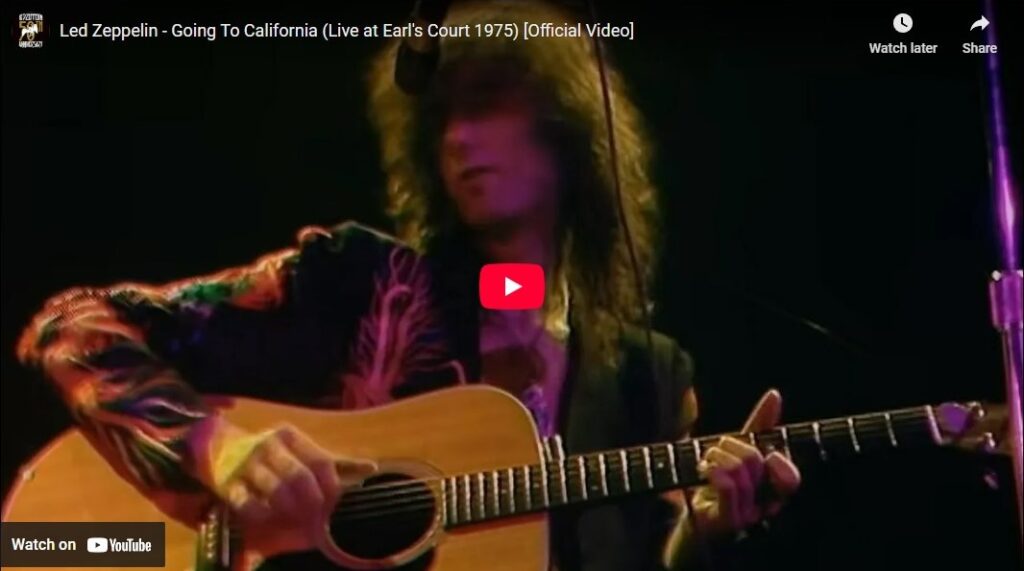
“Stairway to Heaven”
“Immigrant Song”
“Kashmir”
“Rock and Roll”
Best Podcasts and Books About Led Zeppelin
Given the size and impact of Led Zeppelin, much has been said and written about the band. Here, we’ve compiled some essential reading and listening. Go deeper in your Led Zeppelin history journey.
Led Zeppelin: The Biography by Bob Spitz
Released in 2021, journalist Bob Spitz attempts to give the definitive story of the band. And by clocking in at 688 pages, it’s a valiant effort. Spitz has a reputation for being honest, and with his relentless reporting, he unveils every corner of the band’s history — including some pretty unsavory and ugly parts. Some critics have called this biography gossipy, but I mean, you’re writing about Led Zeppelin, a band that famously wore the tightest leather pants in the history of humanity. It should be a little gossipy, no?

- “In this authoritative, unsparing history of the biggest rock group of the 1970s, Spitz delivers inside details and analysis with his well-known gift for storytelling
- ” —PEOPLEFrom the author of the iconic, bestselling history of The Beatles, the definitive account of arguably the greatest rock band of all time
- Rock star
- Whatever that term means to you, chances are it owes a debt to Led Zeppelin
- No one before or since has lived the dream quite like Jimmy Page, Robert Plant, John Paul Jones, and John Bonham

When Giants Walked the Earth by Mick Wall
With When Giants Walked the Earth, Mick Wall approached the mystique of Led Zeppelin, going deep into the creative relationship between Plant and Page and trying to understand what made the band pop so much in the 70s. They really were like giants. Through his reporting and storytelling, he tells a fascinating story of burning the candle on both ends — how excess fuels our creativity, but also can be our downfall.
![When Giants Walked the Earth by Wall, Mick [Hardcover]](https://m.media-amazon.com/images/I/51LOVobkj5L._SL160_.jpg)
- When Giants Walked the EarthWall, Mick
Ramble On Radio: The Led Zeppelin Podcast
Digging Deep with Robert Plant: The Robert Plant Podcast
Or maybe listen to the man himself? A couple of years back, Robert Plant started telling his own stories of mischief and mayhem. On Digging Deep with Robert Plant, the Led Zeppelin songwriter and singer not only reveals interesting tidbits from the Led Zeppelin archives in only a way he could but goes long on heady and philosophical topics. Embrace your inner hippy and subscribe.